 |
 |
 |
 |

Asbestos Detection and Removal
Many buildings contain asbestos, which was used in spray-applied flame retardant, thermal system insulation, and in a variety of other materials. Asbestos was sometimes "flocked" above false ceilings, inside technical ducts, and in many other small spaces where firefighters would have difficulty gaining access. Structural components like asbestos panels were also used. In residences, asbestos was often a component of a type of flocked acoustic ceiling called "popcorn ceiling" or "cottage cheese ceiling", until its production was banned in the U.S. in 1978. However, the ban allowed installers to use up remaining stocks, so houses built as late as 1986 could still have asbestos in their acoustic ceilings. The only way to be sure is to remove a sample and have it tested by a competent laboratory.
Mold Detection and Removal
Molds (or moulds; see spelling differences) are fungi that grow in the form of multicellular filaments called hyphae.[1] A connected network of these tubular branching hyphae has multiple, genetically identical nuclei and is considered a single organism, referred to as a colony. In contrast, fungi that grow as single cells are called yeasts.
Molds are considered to be microbes and do not form a specific taxonomic or phylogenetic grouping, but can be found in the divisions Zygomycota, Deuteromycota and Ascomycota. Some molds cause disease or food spoilage; others play an important role in biodegradation or in the production of various foods, beverages, antibiotics and enzymes.
Lead Testing and Removal
Lead ( /ˈlɛd/) is a main-group element in the carbon group with the symbol Pb (from Latin: plumbum) and atomic number 82. Lead is a soft, malleable poor metal. It is also counted as one of the heavy metals. Metallic lead has a bluish-white color after being freshly cut, but it soon tarnishes to a dull grayish color when exposed to air. Lead has a shiny chrome-silver luster when it is melted into a liquid.
Lead is used in building construction, lead-acid batteries, bullets and shots, weights, as part of solders, pewters, fusible alloys and as a radiation shield. Lead has the highest atomic number of all of the stable elements, although the next higher element, bismuth, has a half-life that is so long (much longer than the age of the universe) that it can be considered stable. Its four stable isotopes have 82 protons, a magic number in the nuclear shell model of atomic nuclei.
Lead, at certain exposure levels, is a poisonous substance to animals as well as for human beings. It damages the nervous system and causes brain disorders. Excessive lead also causes blood disorders in mammals. Like the element mercury, another heavy metal, lead is a neurotoxin that accumulates both in soft tissues and the bones. Lead poisoning has been documented from ancient Rome, ancient Greece, and ancient China.
Environmental Training Classes
Environmental Resource Center offers training options to meet all of your needs. Classes are presented at convenient locations across the country, and live webcasts provide an opportunity to learn without having to travel. All of our classes and webcasts can be tailored to meet your site’s needs and be delivered at your facility.
Our instructors and consultants are full-time employees of Environmental Resource Center. Many come from corporate environmental management and all have hands-on experience. In addition to receiving rave reviews for knowledge, our instructors receive equally high marks for making the classes entertaining and the complex material easy to understand.
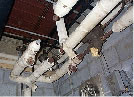 |
Asbestos Detection and Removal |
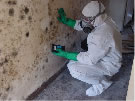 |
Mold Detection and Removal |
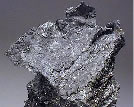 |
Lead Testing and Removal |
 |
Environmental Training Classes |